| |
March 26, 2019


“You’re hired.”
“We’re giving you our business.”
“You got the account.”
“I’m calling about your ad.”
Is this the kind of response your marketing communication gets?
It results from product and/or service offerings backed-up by thought-provoking messages that can seal the deal.
Effective writing is the product of appropriate, outcome-driven thinking. Not just what is said, but the way it is said.
Many businesses don’t always get the response they deserve. This can be because of how they positioned their offer.
If you’re not getting the kind of results you want, good writing could be the key that unlocks the door. Add a wordsmith to your team.
One who can deliver smiles.
Let’s take it to the next level!
Allan B. Starr
Allan B. Starr
President/CEO

+ Marketing + Advertising + Public Relations
Marketing communication is only as effective as the strategy behind it.
Phone: 602-717.7864
astarr@markpart.com www.markpart.com
Serving the Free World from Phoenix, AZ since 1976
The information and attachments within this e-mail are confidential. This information is intended only for the use of the addressee. If the reader of this message is not the intended recipient, you are hereby notified that any dissemination, distribution or copying of this communication, or any attached files is strictly prohibited.
|
|
|
March 9, 2019
What was The Thinker thinking?

When I look at Auguste* Rodin’s The Thinker (which I do every decade or so – without fail) I wonder . . . what was he thinking?
As a writer, my self-serving belief is that “Gus*’ guy” was contemplating the words he would employ when composing a very important message (maybe an invitation to his sculptor’s next gallery showing?).
The point is: the best – most effective – writing is likely preceded by the best thinking. The skilled writer always first determines:
- What is the objective?
- Who is the key audience?
- What are their pertinent wants and needs?
- Which are the fewest and best words through which to “move” them?
Perhaps more than most others, the marketing writer must have an experienced, educated grasp on what gets prospects to react positively to what he/she is “selling.”
Contact Allan Starr, The Wordsmith, for a no-obligation discussion of your marketing goals.
Doing so could turn out to be an example of your best thinking.
Let’s take it to the next level!
February 20, 2019
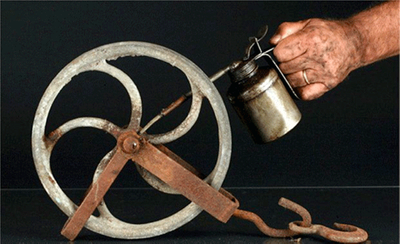
This time-honored proverb has held special meaning for me since, as a teenager, I entered the business world.
I quickly learned that the primary requisite of business was – and is – that before you could win clients they first had to know you exist. Back in The Fifties, that for me meant writing articles, sending letters about my capabilities and knocking on doors . . . a great many doors.
Now, a half-century later, though there have been monumental changes – especially in a wealth of available methods of communication – one thing has stayed the same: Though doing a good job is important, getting the word out is as crucial as it ever was.
My specialty is helping clients enhance their messages through the application of sound marketing principles that include dynamic word usage, updated strategies and penetrating communication techniques.
Contact me for a free-of-charge review of your current messaging. Opportunities to have a meaningful impact on your prospects are a terrible thing to waste.
Let’s take it to the next level!
Allan B. Starr
Allan B. Starr
President/CEO

+ Marketing + Advertising + Public Relations
Marketing communication is only as effective as the strategy behind it.
Phone: 602-717.7864
astarr@markpart.com www.markpart.com
Serving the Free World from Phoenix, AZ since 1976
February 6, 2019

Ideas blossom when words take root.

“Raise your word, not your voice.
. . . It is rain that grows flowers, not thunder.”
— Rumi
My high school journalism instructor told me, “Starr, there are spellers . . . and there are writers. YOU are a writer!” It was then that I realized I might have a future as a wordsmith.
A deeply-rooted business orientation has over the years directed my efforts toward strategic writing; writing with a practical, developmental purpose. The floral reference in the verse (above) applies because when clarity and appropriateness are planted properly, results can bloom.
Because much business writing is seriously lacking in impact, desired results are not achieved. Sadly, there are a far greater number of inept, self-described “business writers” than there are accomplished ones.
I want to demonstrate just how my success-proven experience and passion for excellence can be a significant asset for businesses that need to break through the clutter of mediocrity and the constant, muffled drumbeat of online noise.
Call on me, The Wordsmith, to discover the difference enlightened writing can make.
Let’s take it to the next level!
Allan B. Starr
Allan B. Starr
President/CEO

+ Marketing + Advertising + Public Relations
Marketing communication is only as effective as the strategy behind it.
Phone: 602-717.7864
astarr@markpart.com www.markpart.com
Serving the Free World from Phoenix, AZ since 1976
|
|
|
January 10, 2019
If it was good enough for him
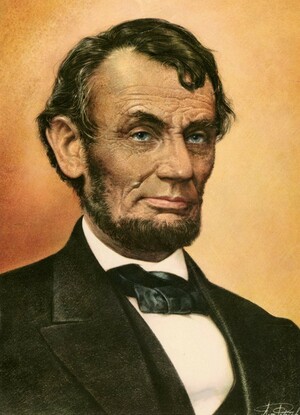
. . . it should be good enough for us. Honestly, we could learn a thing or two about communication – especially the value of brevity – from Lincoln. His second inaugural address had only 701 words. Of those, 505 were words of one syllable and 122 had two syllables.
But, an overabundance of verbiage is not the only thing that’s assassinating the effectiveness of much of today’s marketing communication. Often, it misses the mark in clarity, pertinence and impact.
Free yourself from the slavery of mushy messaging by declaring your own civil war on verbosity and blurred meaning. Contact Allan Starr, The Wordsmith, to help you proclaim emancipation from verbalization.
It seems as though if Abe were to be revered for delivering an Address filled with “hot air,” his likeness would be on balloons, not our currency.
Let Allan Starr, The Wordsmith, help you empower your messages.
|
|
|
October 18, 2018
In her hit song, What’s Love Got To Do With It? Tina Turner tunefully deals with that burning question.
My particular focus is on answering a similar – yet quite different – question: What do words have to do with it?
These questions may seem unrelated, but they share the same answer, which is . . . everything!
Though visuals have immense power, their impact is greatly heightened when they are complemented by well-chosen words. Of course, even in the absence of visuals, there is great power in words. The Declaration of Independence and U.S. Constitution come to mind.
In the realm of business, it has been proven that marketing messages, when expertly worded, can be a powerful force. One that can be taken to the bank.
I would like to be your wordsmith so I can prove it to you.
Kind of like a poor man’s John Hancock.
September 17, 2018
| Harness the power of words
Almost nothing has more influence on our lives than words.
From the earliest messages on stone tablets, to the U.S. Constitution, written words have mattered. Whether it was that important letter to or from someone, or the advertisements that attracted us to most everything we own or do, words play an important role in our daily lives.
By themselves, words are merely disjointed pieces in a puzzle. But when they are strategically chosen and arranged to form thoughts and ideas, their power comes into sharp focus. Crafted with expertise, they can literally move mountains.
My focus is on putting words together strategically. Though they may not physically move mountains, over the years they have helped to influence people. People like those you want to influence. My specialty is using words to sell products, services and ideas.
The tools I use in writing and editing include:
- Listening
- Vocabulary
- Clarity
- Common sense
- Strategic thinking
- Experience
- Uncompromising effort
- Self-preservation*
I’m asking you for the opportunity to apply my writing and editing skills to help you reach your goals. Given the chance, I’m confident I can demonstrate just why people continually turn to me for their wordsmithing.
* I depend heavily on repeat business. If I don’t get results, repeat business ain’t – er, is not – going to happen! |
|
|
August 31, 2018
Taglines are a simple way to identify your brand
The purpose of a tagline is to associate one key thought with a brand in the minds of key consumers. Most, but not all, take the form of a promise. Some notable examples:
- Disney – The happiest place on earth.
- Avis – We try harder.
- Nike – Just do it.
- Capital One – What’s in your wallet?
- Kentucky Fried Chicken – Finger Lickin’ Good.
- Budweiser – The king of beers.
Hopefully, on a regular basis, you are sending out a lot of substantive information on what your brand has to offer your various audiences. It’s necessary that such messages go into some depth, are frequent, and differ somewhat each time they are sent out. But it is the job of the tagline to plant one key, leave-behind thought in the target audience’s mind . . . over and over again. It reminds people what you think is most important about your offers.
Does your business have one? If not, I would heartily recommend you adopt and use one.
We have a tagline. Our mission since 1976 has been to stand behind the suggestion it makes. By the way, that’s it . . . right above my name on the signature line below.
Let’s take it to the next level!
|
|
|
August 14, 2018

The above saying has always been a favorite of mine. As a kid, it was the taunt our, or the other, team used after a close victory.
I had no idea this saying would one day play into my current occupation as a copy editor.
Indeed, written words that “almost” fit a thought perfectly – especially a selling point – can spell the difference between a marketing hit, or miss.
More often than not, some of the original copy clients send for review can be merely a tad off point But that’s neither good enough for them, nor me.
Unlike casual, backyard horseshoe games, there often is a lot at stake (pardon the pun) in marketing communication.
And the difference between a “leaner” and a “ringer” can be the sweet sound made by a cash register.
August 13, 2018
We’re not just needed to correct blatant errors.
But also the subtle flaws that can distract your audience and cloud your meaning.
Good editors love language, and revise content to ensure clarity and accuracy.
We turn a rough draft with spelling, grammar, language or style errors into a piece ready to fulfill its mission.
Copy editors deal with things like:
- Clarity
- Tone
- Consistency
- Grammar
- Punctuation
- Transitions
- Structure
Older Posts »
|



